
When deciding between secured credit cards vs unsecured, the answer depends on your current credit score. If you have no credit or bad credit, a secured credit card is better because it is easier to get by putting down a cash deposit. If you have good to excellent credit, an unsecured credit card is better because it requires no deposit, offers higher spending limits, and gives you better rewards.
Introduction: Finding the Right Card for You
Have you ever applied for a credit card and been told no? It hurts. It can make you feel stuck. Maybe you want to buy a car, rent a nice apartment, or just have money for emergencies. But a low credit score stands in your way. You know you need a credit card to build your score, but banks will not give you one because your score is too low. It is a frustrating loop.
Today, we will break that loop. We are going to talk about secured credit cards vs unsecured. We will use simple words. No confusing bank talk. By the end of this page, you will know exactly which card is right for your wallet and how to use it safely.
What Is a Secured Credit Card?
Think of a secured credit card like a rental deposit. When you rent an apartment, you give the landlord a security deposit. If you break a window, they keep the money. If you leave the place clean, you get the money back.
A secured card works the same way. You give the bank a cash deposit. Usually, it is around $200. The bank holds onto this money. Then, they give you a credit card with a $200 limit.
You use the card to buy groceries or gas. Then, you pay the bill every month. If you stop paying your bill, the bank keeps your $200 deposit. Because the bank has your cash, they take zero risk. This makes it very easy to get approved, even if you have made money mistakes in the past. According to the Consumer Financial Protection Bureau (CFPB), a government team that protects your money rights, secured cards are a safe tool designed specifically to help people build or rebuild their credit history.
What Is an Unsecured Credit Card?
An unsecured card is the normal credit card most people think about. There is no cash deposit required.
Instead of asking for cash upfront, the bank looks at your past behavior. They check your credit report. If they see that you always pay your bills on time, they trust you. They hand you a card with a spending limit.
If you do not pay your bill, the bank does not have a deposit to take. They lose money. Because of this high risk, banks only give unsecured cards to people who already have a good track record. Financial experts note that unsecured cards often come with extra perks, like cash back, travel miles, and much higher spending limits.
Secured vs Unsecured Credit Cards: How Do They Work?
Let us look at a simple step-by-step path for both cards.
How a Secured Card Works:
- You apply online.
- You get approved (almost everyone does).
- You send the bank a $200 deposit.
- The bank mails you a card with a $200 limit.
- You buy a $20 tank of gas.
- You pay the $20 bill at the end of the month.
- The bank tells the credit bureaus you are doing a great job.
- Later, you close the card or upgrade it, and you get your $200 deposit back.
How an Unsecured Card Works:
- You apply online.
- The bank checks your credit history.
- If your score is good, you get approved.
- The bank mails you a card with a $2,000 limit (no deposit needed).
- You buy groceries and pay the bill later.
- You earn rewards and cash back for your shopping.
Who Should Get Which Card?
Still not sure which one to pick? Let us look at three simple examples to help you decide between secured and unsecured credit cards.
Meet John: John is 20 years old. He has never had a credit card. His score is zero. He should get a secured card. It is his set of training wheels to prove he can handle money.
Meet Sarah: Sarah had a hard time three years ago. She lost her job and missed her car payments. Her score dropped very low. She should get a secured card. It is her second chance to show banks she is back on her feet.
Meet Mike: Mike always pays his bills on time. His score is very high. He wants to fly to Florida for vacation. He should get an unsecured card to earn free travel points.
The Rules of Credit: Who Keeps Track?
To really understand secured credit cards vs unsecured, you need to know who makes the rules.
Your credit score is not magic. It is a math grade. The most famous grade is called a FICO score. The FICO company looks at how you handle debt and gives you a number between 300 and 850. A score of 800 is an A+. A score of 500 is an F.
When you use either a secured or unsecured card, the bank reports your actions to three big companies: Experian, TransUnion, and Equifax. These companies write your report card. The Federal Trade Commission (FTC) makes sure these companies treat you fairly and keep accurate records.
Important Note: Neither card is a magic wand. The government and the banks do not promise your score will go up just because you open a card. Your score only goes up if you pay your bill on time, every single month. There are no instant fixes in the financial world.
Benefits and Risks: Weighing Your Options
Let us weigh the good and the bad of secured vs unsecured credit cards.
The Good Side of Secured Cards
- Easy to Get: You do not need a perfect past.
- Builds Trust: It proves to banks you can handle money now.
- Forces Good Habits: Since your limit is low, you cannot get into deep debt.
The Bad Side of Secured Cards
- Upfront Cost: You have to give up $200 to $500 of your own cash right away.
- Low Limits: You cannot use it for big emergencies.
- No Rewards: You rarely get cash back or travel points.
The Good Side of Unsecured Cards
- Keep Your Cash: No deposit required.
- High Limits: You might get a very high spending limit.
- Free Perks: You can earn free flights, hotel stays, or cash back.
The Bad Side of Unsecured Cards
- Hard to Get: If your score is low, you will likely get rejected.
- Debt Trap: Having a high limit can tempt you to spend money you do not have.
- Strict Penalties: If you miss payments, your score will crash quickly.
Understanding Costs and Fees
Money is tight. You need to know what these cards cost.
- Annual Fees: Some cards charge you a fee just to have the card in your wallet. Try to find a card with a $0 annual fee.
- Interest Rates (APR): Imagine you borrow $100 from a friend. Your friend says, ‘Pay me back next month, but if you do not, you owe me $120.’ That extra $20 is interest. Banks do the same thing. If you buy a $100 pair of shoes and do not pay the whole $100 bill that month, the bank charges you a fee. Secured cards usually have very high interest rates. The rule is simple: pay your whole bill every month, and you will pay zero interest.
- Late Fees: If you miss your payment day, the bank will charge you a penalty fee. Always pay on time.
How to Choose a Provider Safely
There are bad companies out there that want to trick you. When looking at secured credit cards vs unsecured, you must be careful.
A real, safe credit card must come from a real bank. Look for banks that are protected by the FDIC or credit unions protected by the NCUA. These are government stamps of approval.
If you are trying to fix your past mistakes, you might also want to look into a professional to help clean up errors on your report. A safe provider will never promise to fix your credit overnight.
Red Flags to Avoid
Do not let anyone steal your money. Watch out for these warning signs:
- Guaranteed Approval: No real bank promises approval without checking who you are.
- Junk Fees: If a secured card asks for a $100 application fee on top of your deposit, run away.
- Cards That Do Not Report: Make sure the card says it reports to all three major credit bureaus. If they do not report your good behavior, your score will never go up.
Your Simple Checklist for Success
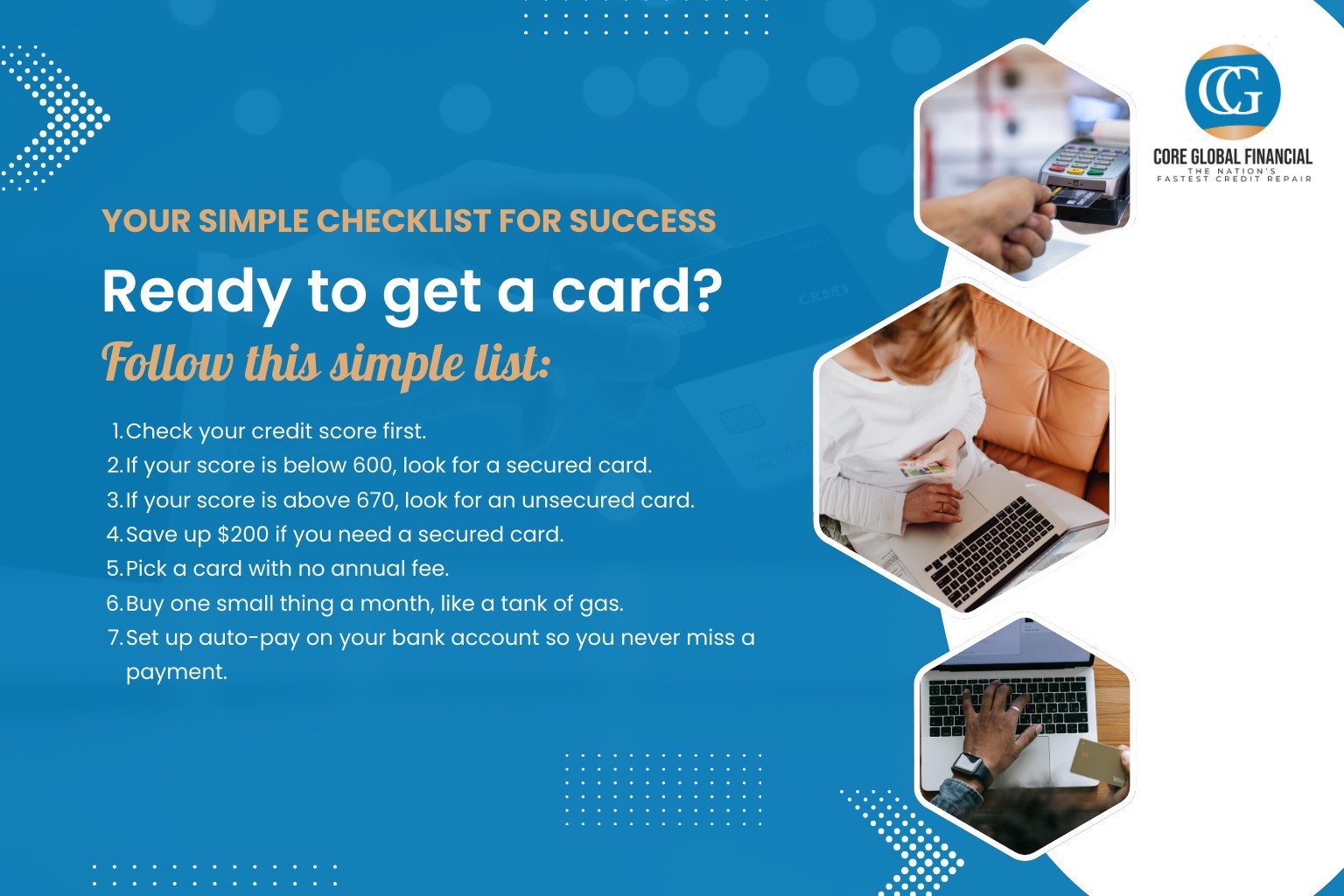
Ready to get a card? Follow this simple list:
- Check your credit score first.
- If your score is below 600, look for a secured card.
- If your score is above 670, look for an unsecured card.
- Save up $200 if you need a secured card.
- Pick a card with no annual fee.
- Buy one small thing a month, like a tank of gas.
- Set up auto-pay on your bank account so you never miss a payment.
Moving Forward With Financial Confidence
Understanding the difference between secured and unsecured credit cards vs unsecured is a huge step toward a better life. It is not about feeling bad about your past. It is about taking control of your future.
If you are just starting or starting over, a secured card is your best friend. It is a safe, simple tool. You give them a little cash, you prove you are responsible, and you watch your score grow. If you already have a good history, an unsecured card is your reward for your hard work.
Remember, no card is magic. The real power is in your hands. Buy small. Pay in full. Pay on time. That is the secret recipe. If you want to dive deeper into how your score works, check out our guide on.
Take Control of Your Financial Future Today
Building a strong financial house takes time, patience, and the right tools. Whether you choose a secured or unsecured card, the most important step is simply starting.
At Core Global Financial, we believe everyone deserves a clear path to financial freedom. You do not have to figure this out alone. We are here to help you understand your options, clean up your past, and build a brighter tomorrow. Visit us to explore more resources, expert advice, and professional services designed to protect your money and grow your wealth. Let us build your financial confidence together!
Frequently Asked Questions
Can a secured credit card become an unsecured card? Yes. Many banks watch your account. If you pay on time for six to twelve months, they will mail your deposit back to you. Your card then becomes unsecured automatically.
Do secured cards build credit faster than unsecured cards? No. The credit bureaus treat them the same. An on-time payment is an on-time payment. One does not work faster than the other.
Will I lose my deposit on a secured card? You only lose your deposit if you stop paying your monthly bill. If you close the account in good standing, the bank mails your deposit back to you in full.
How many credit cards should I have to build my score? You only need one or two cards to start. Do not apply for five cards at once. That looks bad to the banks and can actually hurt your score.

